Posts Tagged ‘Israeli cuisine’

ABOUT US
Meet Moshe Malka

My name is Moshe Malka. I’m an official licenssed tour guide in Israel and I invite you to visit Israel, the Holy Land, with me.

Every visitor is different and we all have a different way of experiencing things. My tours are all tailored specifically to fully meet your needs and wishes, and so you’ll have the opportunity to experience this unique country first hand just the way you want to experience it: in a small group in a ‘private car tour’ (with my fully a/c 6 seater car VW van) or in a big bus with a big group of people. Any way you choose, together we will build your trip and make it a once in a lifetime experience.

See you in Israel!

Come, learn some more about me and my company:

Israel With Moshe was established in 1992 by Moshe Malka, a tourist guide, licensed with the Ministry of Tourism. We have spent more than a decade organizing missions and leading tour groups and individuals throughout Israel. We provide a complete experience and tailor made trips to Israel, Jordan and Egypt, offered in English and many other languages. All our tours use very comfortable vehicles, licenssed to drive tourists, starting with busses and experienced drivers and down to our new VW multivan

Comprehensive planning will make your trip to the Holy Land a special event. We will assist with flight arrangements, travel insurance, accommodations, ‘follow-the-bible’ tours of the Holy Land, Bar and Bat Mitzvah trips, leisure trips, trips to nearby countries, or any other requests to make your travels special.

 
(more…)


Cooking vacations with a Mediterranean accent in the biblical Land of Milk and Honey

The cooking vacation of a lifetime

Get to know fascinating Israel by getting to know its food! Lively seaside Tel Aviv, the winding alleyways of Jerusalem and the Galilee hills studded with olive orchards and vineyards – these are the breathtaking backdrops for our cooking vacations in Israel.

Our week-long culinary tours of Israel feature fabulous food and excellent wines, colorful open-air markets bursting with gorgeous local produce and unusual hands-on cooking classes that explore the rich tapestry of Israel’s ethnic melting pot.

Food, fun and friendship in one of the world’s most captivating destinations – our recipe for the most exciting cooking vacation ever!

Tasting the real Israel

Nothing can bring you closer to the essence of Israel than our fantastic hands-on cooking vacations. Our culinary tours take you way beyond the usual tourist experience to get to know the real Israel – tasting, smelling, seeing, touching and learning how to create delicious, authentic Israeli dishes yourself.

Our week-long cooking vacations start in magical Jerusalem, move on to green Galilee and finish in vibrant Tel Aviv. Each stop on our culinary tours reveals more about the vast variety of ethnic influences on Israeli cuisine – the immigrants who poured in from more than 120 lands, plus the centuries-old culinary traditions of local Arabs and Jews.

Savoring the Seven Species

In the Bible, Israel was known as the Land of Milk and Honey. Our cooking vacations will bring to life the biblical list of nature’s bounties: “… a land of wheat and barley, and vines and fig-trees and pomegranates; a land of olive-trees and honey…” These are the Seven Species, and they remain the backbone of the Mediterranean kitchen to this day.

You’ll get to know the Seven Species and more as our cooking vacations in Israel take you to a boutique dairy, to a special winery and to the spectacular open-air produce markets in Jerusalem and Tel Aviv. Not to mention a delicious, after-dark visits to the streets of Israel to experience street food and local culture.

Hands-on cooking vacations

And what’s cooking on our culinary tours? You’ll enjoy fascinating hands-on cooking classes, each one reflecting the unique and authentic features of its location:

- The Mediterranean way of eating, set in cosmopolitan Tel Aviv on the shores of that fabled sea

- The lore of local herbs and spices, at a spice farm in the Judean Hills

- The secrets of cheese-making, at a boutique dairy in Galilee

- The glory of Galilee cuisine, in an Arab kitchen in a Galilee village

- Cooking vacations are based on small groups (4-12 people) so we can go
behind the scenes and gain an insider’s insight into how the locals live.

Join us

Add to this rich blend of flavors and fragrances a wealth of breathtaking scenery and sacred sites, stir in superb restaurants and season with accommodations in charming boutique hotels.

The result: The cooking vacation of a lifetime – fun, relaxed, enlightening and downright delicious.


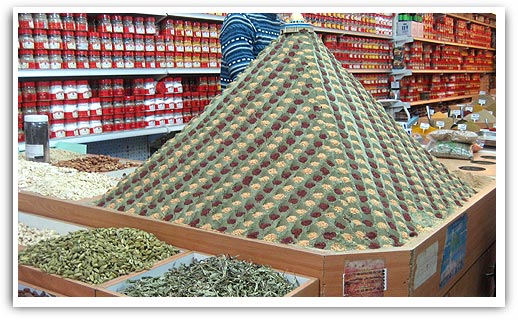
Cooking Vacations in Israel: Herbs and Spices

Cooking vacation: a chance to get to know the local herbs and spices.

A culinary tour in Israel will inevitably acquaint you with the large selection of herbs and spices in the country. Israelis have a strong link to the local herbs and spices. This link, so enriching the present-day cuisine and every Israeli table, stems from antiquity. In those days, man was closer to Nature. In the Eastern Mediterranean, most people lived off the land. Agriculture was the main occupation and the local herbs were used both for cooking and for medicine.

The Land of Israel, the ancient homeland of the Jewish People, was blessed with many herbs. The ancient texts mention some of them such as dill and corianders, oregano and marjoram, myrtle and thyme. All of them were grown specifically for culinary and medicinal uses. The Talmud even gives precise instruction for planting and watering these herbs, so important for the local cuisine for the last 3000 years.

It is no surprise, then, that Israel has a flourishing industry of herbs and spices and is one of the largest exporters of herbal products and condiments to Europe and the US.
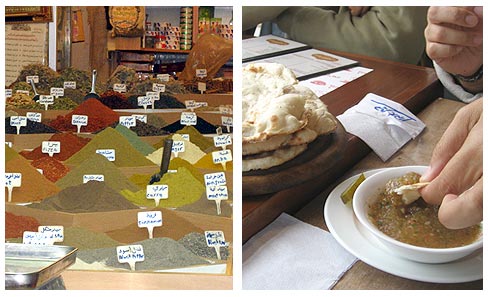
Cooking Vacations with Israeli Cuisine

The Israeli cuisine makes extensive use of fresh herbs. In almost every house or balcony, even in the large cities, herbs are grown to make infusions or as spices in everyday dishes.

Walking the streets of Tel Aviv during your cooking vacations, just raise your eyes and look at the balconies and you will see mint and basil peeping at you. Fresh herbs used for adding taste to dishes are a healthy, real and refined way for those of us who wish to avoid using soup powder or condensed industrial spices. Naturally, during our cooking vacations, we will use these herbs freely for taste and scent.
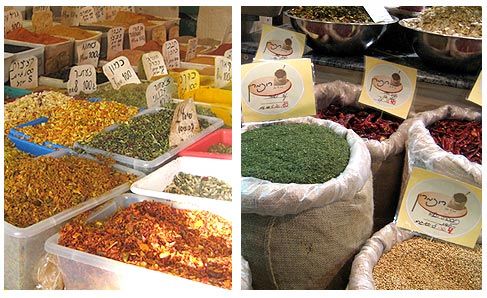
Cooking Vacations – Meeting with popular herbs in Israel

Let’s look now at some of the most popular herbs and spices in the present Israeli cuisine:

Za’atar. Za’atar is probably the biblical “moss” mentioned since the days of King Solomon. It is closely related to oregano, marjoram and thyme. Natural medicine uses it as a well-proven disinfectant and as an aid in reducing headaches. In the kitchen, Za’atar is suitable for practically all the Middle-Eastern dishes, and upgrades even a freshly chopped vegetable salad.

Jerusalem Bruschetta

Take some toast, rub a clove of garlic on the toast, sprinkle olive oil and crushed tomato and add a generous amount of Za’atar on top.

Coriander. Coriander is mentioned in the Bible from the times our forefathers went to Egypt. It is a well-known remedy for stomach aches and strengthens the heart. In the kitchen it is used, mainly fresh, in a wide variety of dishes. The chopped fresh leaves should be added just before the cooking is done.

Sage. Sage is known to be originally from the Middle East. It was brought to Europe by the Roman soldiers who conquered Palestine. Natural medicine believes it lowers the blood-pressure, helps fight the common cold and gum infections. Some even produce a perfume based on sage. In the kitchen we have to use it with care, avoid adding to much sage since its strong taste tends to dominate the dish. It’s a good idea to add it to meat dishes and even to pasta with a fine sauce of olive oil, sage and garlic.

Mint. Mint, or its locally known variant Na’ana, is known the world over. It is originally from Greece and is known from ancient times all over the Middle East. Natural medicine uses it to relieve throat aches. Many Israelis drink tea with na’ana. In summer it is customary to serve cold water with mint leaves and lemon in every restaurant or café. The Arab tabouleh salad uses na’ana as you can see in the recipe included in the cooking workshop in the Arab Galilee culinary tour. For example, it’s a good idea to add na’ana leaves to fish kebabs.

Parsley. Natural medicine uses it to treat problems in the urinary system. Yet, it is best known for its place in the Israeli cuisine. Sometimes it seems that without parsley, there is no Israeli cooking… It is used in copious amounts in practically every dish (tahina, tabouleh, salads, hummus…).

Thyme. Thyme, the poets’ and chef’s beloved spice. Natural medicine uses it to calm cough and to relax strained muscles, if used in a bath. In the kitchen it’s delicate taste makes it suitable almost for any dish. Thyme is good for a meat roast or for roasted vegetables, finds its place in pasta and even in ice-cream.

Rosemary. Rosemary is a very adaptable plant. Driving along the coast or walking in parks during your cooking vacations, you will see it everywhere. Rosemary oil is good for the scalp and strengthens your roots. In the kitchen it is widely used but you have to be careful: it has a strong taste. It can be added to meat dishes, and you can use its branches as skewers and even place it on the grill so its scent is blended with the kebabs. In addition, you can add rosemary to any marinade.

Basil. Natural medicine uses basil to treat stomach aches, nausea and vomiting. In the kitchen it is synonymous to a good match. You can add it to practically any dish, preferably fresh including vegetable salads or rice and of course, you can chop it to make pesto.
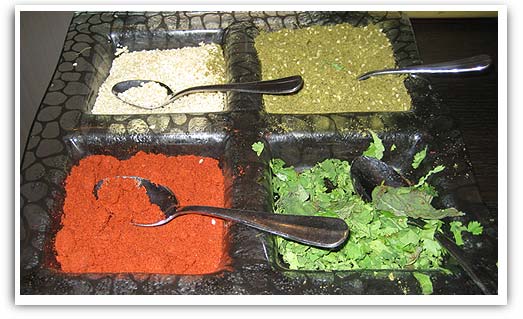
We will meet all these herbs and spices, and many more during the workshops in the cooking vacations and culinary tours and learn how to use them to make savory dishes and drinks.

  • Announcements and news

  • Luach for Jerusalem, Israel

    • May 20, 2013
    • 11 Sivan 5773
    • י"א סיון תשע"ג
    • Zmanim
      • Alot HaShachar: 03:13
      • Netz: 04:37
      • Earliest Tallit: 03:42
      • Latest Sh'ma: 08:06
      • Chatzot: 11:35
      • Mincha Gedola: 12:09
      • Mincha Ktana: 15:38
      • Plag Hamincha: 17:05
      • Shkiah: 18:33
      • Tzet haKochavim: 19:16
    • Shabbat
      • It will come in 4 days.
      • Candle light : May 24, 2013 18:18
      • Shabbat ends: May 25, 2013 19:20
    • Weekly Torah reading
      • Chapter: Beha'alotcha
      • Haftara: Zechariah 2:14 - 4:7
    • Holidays
      • Upcoming date: Tzom Tammuz
      • will come on Tuesday
        June 25, 2013
        17 Tammuz 5773
  • Tags

    ancient Roman Theatre Bahai Gardens Banias Bat Mitzvah boat ride cable car Caesarea Caesarea Philippi camp camps Carmel Market CHILDREN Christian Cooking Vacation Dead Sea Holocaust Itinerary Jeep Ride Massada Mount Beatitudes Mt. Scopus Nazareth Poland Shoa Tabgha